

Transparency is the Only Way Forward for California
03/05/2026, 9:43 AM | Roseville, Calfornia

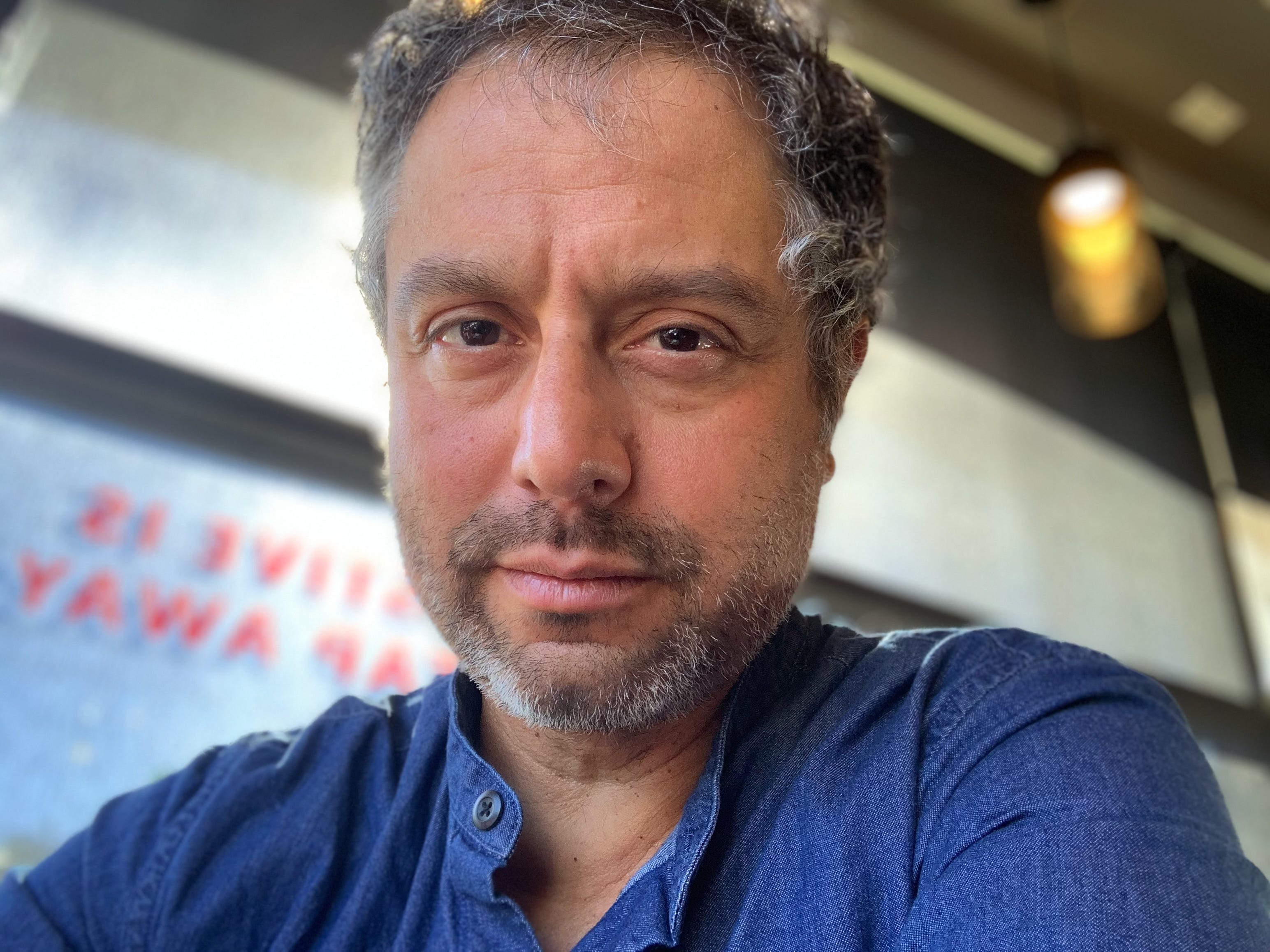
I’m trying to get into the habit of documenting my journey every day as a practice of transparency—the same kind of transparency I would like to bring to California’s budgets. My hope is that we can track public spending the way we would follow a film in production, watching how decisions today shape the story of our future. If I were fortunate enough to serve, I would simply have the privilege of directing that story.
I used to sit in long meetings with Japanese executives when I worked at Nissan. One of my coworkers would make fun of me for occasionally falling asleep. It was difficult for me to stay focused, especially in meetings where every statement had to be formally confirmed for understanding.
“Please confirm, Louis-san.”
“I confirm,” I would say—even though sometimes I hadn’t fully processed what I was confirming.
My friend at Nissan found this amusing, but it made me feel a little bad about myself. The truth was, I was often bored.
Ironically, I had loved the Nissan 300ZX when it came out in 1990. So when I had the opportunity to work in product development at Nissan, it felt like a dream come true. But the reality of Nissan’s product development division turned out to be more about internal dynamics than actual product development.
The vice president was a highly intelligent man, but he was having an affair with a secretary, and in meetings you could see that he had a weakness for female approval. Many of the research leaders were women who were more focused on proving their strategies correct than on building great cars. In my view, that culture contributed to Nissan’s decline.
I was the only English major in a room full of MBAs, and one of the few real car enthusiasts in the group. The only other enthusiast I connected with was an Armenian colleague from USC named Steve.
Steve liked to joke that Honda buyers were “mindless robots,” because once someone bought a Honda, they almost never considered another brand. I used to tell him that Honda buyers weren’t necessarily looking for beauty or character—the car was more like a tool than something iconic, like the Millennium Falcon.
We traveled around the country interviewing dealerships while researching the first Nissan full-size truck. Steve would ask endless questions—so many that sometimes even the dealers would get irritated. He was deeply interested in the technical details of vehicle development. His vision was that the Nissan truck should be built like a Mack Truck.
During one meeting, I suggested something different.
“It shouldn’t be like a Mack Truck,” I said. “It should be like a rhino—strong, agile, powerful.”
But Steve was a manager, and I wasn’t, so the “Mack Truck” idea stuck.
When we traveled to New Jersey to visit dealerships, Steve made sure we stayed at the Plaza Hotel in New York City. My room was so small it felt like a walk-in closet—just enough space for a bed.
The next morning in the lobby I told Steve how tiny my room was.
“This place is more about the history,” he said.
Even though Steve could be a little Teutonic in personality, I enjoyed talking with him because we were both enthusiasts. He wasn’t really a driver—he didn’t care much what car he personally drove—but he was obsessed with strategy.
His biggest puzzle was this:How could we convince Honda buyers to buy a Nissan?
The research suggested they simply wouldn’t.
That fascinated him, and it made me think about it too. My manager, Orth, used to tell me:
“It’s all about segmentation. You have to understand the mindset of each market and their unmet needs. Our job is to identify the segment that will buy the vehicle we’re developing.”
At the time, I was a specialist—just below a Manager II. My friend who joked about me falling asleep was a Manager II. Above him was a Manager I, who supervised several Manager IIs, and above that was a director who ran an entire department.
The problem for me was that my only real ambition was to make a great car.
But no one else seemed to care about that. Everything revolved around segmentation, demographics, and mindset.
At one point I presented a concept I called the Camper Mini-Van—a van designed for adventure and exploration. But the VP was captivated by another idea presented by the research team: the “Sexy Mom” Mini-Van concept, which eventually became the Nissan Quest.
The Quest turned out to be a commercial disappointment and was eventually discontinued.
That project was the moment when I realized something important: working for a large corporation like Nissan left me feeling as if I had no real purpose. Looking back, I sometimes feel like God sent me there to learn how easy it is for white-collar workers to become trapped in systems that disconnect them from what they actually care about.
The only other car enthusiast I remember meeting there was a guy named Davin. He met a woman from Paris, married her, and bought a GTR. He was fascinating to talk to, but he wasn’t in product development. Eventually he transferred to a regional office somewhere, and I never saw him again.
When I left Nissan, I felt discouraged. I searched for other jobs and eventually decided to try substitute teaching.
At first I was hesitant, but I quickly realized something surprising: being around middle school students put me into a flow state. I connected with them easily.
Years earlier, when I worked as a researcher at UCLA studying homelessness, my manager once told me, “If you were a teacher, kids would love you.”
At the time I didn’t know why she said that.
We used to work in a tall white building on Wilshire—the one that now has “UCLA” written on the top. Just before I left UCLA to join Nissan, she called me into her office.
“The head of research called me,” she said. “She had a question about your follow-up data.”
She showed me my file.
“Your follow-up rates over a two-year period are 100 percent.”
I looked at her, confused.
“That’s statistically very improbable for this population,” she said.
The participants were homeless individuals we were tracking for the study.
“I was asked to ask you something,” she continued. “Did you make up any of this data?”
Then she handed me the list and asked me to describe each interview.
I explained how I had found each participant, where I met them, and how I followed up with them.
She started laughing.
“Louis,” she said, “this is impossible. But it’s amazing.”
Not long after that conversation, I left UCLA and went to work for Nissan in Gardena, California, where I stayed for five years—before eventually becoming a teacher in South Central Los Angeles for five years before I’d move to Panorama City, then Sherman Oaks where I would have an encounter an executive team member of LAUSD -- Sophia Mendoza -- not only would she prove to not be interested in learning, she’d prove to be quite vindictive in targeting me at my work site. Her aggressiveness revealed the true nature of reality occurring before me inside the city of Los Angeles — the top people at LAUSD didn’t care about learning.
I thought everybody was trying.
But they weren’t…
It changed my view of the world.
I had been naive this whole time, thinking Gotham had been fictional.
And here I was like Dorothy
discovering a reality that would lead to the Wizards of Oz.
My narrative would show them to me through a series of events that revealed the Los Angeles Unified School District was making up evidence against teachers by feeding kids words orally while they wrote their statements that would be use as evidence to make fake accusations against teachers.
I didn’t think it was really true.
But to create a premise
And to stress test it
LAUSD delivered on my theory — they were corrupt all the way to the administrative level.
They were playing chess
and I suppose, I had engage the best I could…so I collected evidence of the truth
And made sure California’s Attorney General, Rob Bonta, knew.
He knows now.
Mission Accomplished.
I’m just curious what someone like that would do with the new knowledge of the reality that actually exists in LAUSD schools.
Coincidentally, the FBI is investigating its superintendent.
I wonder if Rob Bonta is going to change the story of how children are being educated in Los Angeles. I wonder if he’s going to figure the system that is secretly occurring inside LAUSD schools — it’s the hand of the elites — I can feel it.